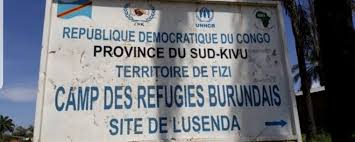
CDH/VICAR has received alarming reports from
the Lusenda
and Mulongwe refugee camps in the Democratic Republic of Congo,
confirming that UNHCR has suspended the payment of teachers working
in camp schools. This abrupt decision directly impacts
refugee children who already face heightened vulnerability and limited access
to essential services. With no salary support, teachers are unable to continue
their duties, placing thousands of refugee students at immediate risk of losing
their only stable access to education.
Following the
suspension, UNHCR staff reportedly informed refugee parents that they must now pay the teachers
out of their own limited resources. For families already
struggling to meet basic needs, this requirement is simply impossible to
fulfill. Refugees in these camps live with severe economic constraints, and the
expectation that they can finance the education system themselves demonstrates
a profound disconnect from their reality. The measure is not only unworkable,
but also undermines the fundamental purpose of humanitarian protection.
This situation
represents a clear violation of Articles 22 and 23 of the 1951 Geneva Convention,
which guarantee refugees’ right to education and access to public assistance.
Education is a core protection component, not a negotiable service. Suspending
teacher payments and shifting the burden onto refugees threatens to produce
long-term harm, including increased school dropouts, protection risks for
children, and further marginalization of already vulnerable families. Such
practices contradict international obligations and jeopardize the future of
refugee children who depend on structured schooling for safety, stability, and
development.
CDH/VICAR urges
UNHCR and Congolese authorities to immediately reconsider and reverse this
decision. Humanitarian agencies must uphold their responsibilities by ensuring
continuous access to quality education in refugee settings. As part of its
protection-monitoring activities, CDH/VICAR will continue documenting the
impact of this suspension, engaging all relevant actors, and advocating for the
restoration of teachers’ salaries and the safeguarding of refugee children’s
rights. No child should be deprived of education due to an administrative
decision that contradicts international commitments.
Gallery

Related Case Study